Table Of Content
Hair of the eyebrows prevents sweat and other particles from dripping into and bothering the eyes. Hair also has a sensory function due to sensory innervation by a hair root plexus surrounding the base of each hair follicle. Hair is extremely sensitive to air movement or other disturbances in the environment, much more so than the skin surface. This feature is also useful for the detection of the presence of insects or other potentially damaging substances on the skin surface. This is visible in humans as goose bumps and even more obvious in animals, such as when a frightened cat raises its fur.
Microanatomy of Anagen Phase Hair
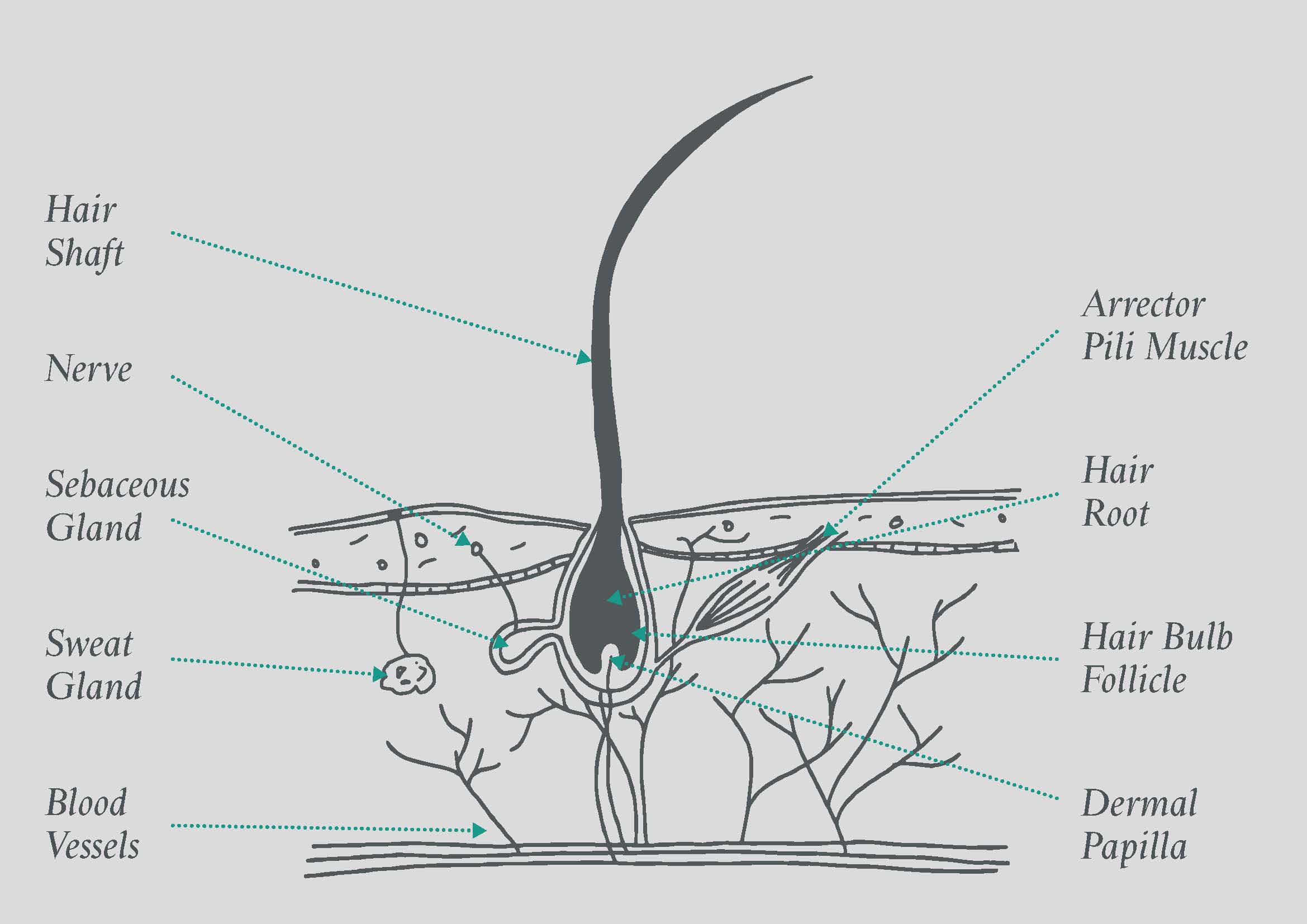
The more oval-shaped the cross-section is, the curlier the hair will be. Each hair follicle is attached to a tiny muscle (arrector pili) that can make the hair stand up. These nerves sense hair movement and are sensitive to even the slightest draft. A piece of hair may look simple, but it’s one of the body's most complicated structures. The hair follicle is the part below the skin, and the hair shaft is what you see above your skin.
Hair Follicle
This type of hair loss is referred to as alopecia – regardless of how large the bald spot is or whether it affects the scalp or body hair. But baldness can also be permanent – one typical example is gradual hair loss in men (male pattern hair loss). We studied the molecular hair structure of several individuals using X-ray diffraction. Hair samples were collected from 12 healthy individuals of various characteristics, such as gender, optical appearance and genetic relation.
Structure and Function
In many other mammals, they contain much longer, whisker-like hairs that act as tactile sensors. In some mammals, such as hedgehogs and porcupines, the hairs have been modified into hard spines or quills. These are covered with thick plates of keratin and serve as protection against predators.
Grey's Anatomy's star explains character's hair transformation - Digital Spy
Grey's Anatomy's star explains character's hair transformation.
Posted: Thu, 28 Oct 2021 07:00:00 GMT [source]
The first to develop is the lanugo, a layer of downy, slender hairs that begin growing in the third or fourth month of fetal life and are entirely shed either before or shortly after birth. During the first few months of infancy there grow fine, short, unpigmented hairs called down hair, or vellus. Vellus covers every part of the body except the palms of the hands, the soles of the feet, undersurfaces of the fingers and toes, and a few other places. At and following puberty, this hair is supplemented by longer, coarser, more heavily pigmented hair called terminal hair that develops in the armpits, genital regions, and, in males, on the face and sometimes on parts of the trunk and limbs.
The adult human hair is around 20–180 µm in width, and generally grows to a length of approximately 90 cm. It consists of many layers including the cuticle, the cortex and the medulla. These layers are bound together by the cell membrane complex (Robbins, 2012). The hair follicle is made of multiple layers of cells that form from basal cells in the hair matrix and the hair root. Cells of the hair matrix divide and differentiate to form the layers of the hair.
Hair and Scalp Disorders
How much of each hair type you have varies from person to person and also depends on your age and sex. About 30 percent of the body’s surface is covered with terminal hair in women, compared to about 90 percent in men. In fact, as we get older, the number of hair follicles per square inch decreases as our bodies stretch and grow.

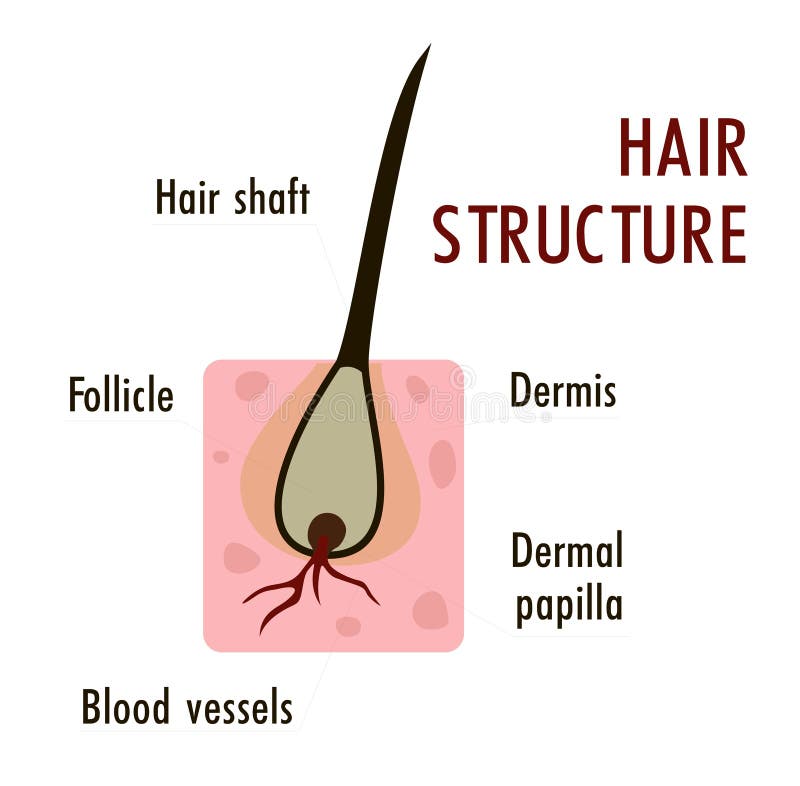
Nearly whole body surface is coated with the hairs except a few areas like palms, soles and mucosal regions of lips and external genitalia. The ones located in several areas like scalp, eyebrows and eyelashes are thicker, longer and pigmented and are called terminal hairs. Humans have approximately 5 million hair follicles and 100,000 of them are located on the scalp [11] (Table 2) [2]. The histology of your hair can vary slightly depending on your ethnicity, being influenced by race and genes. The hair follicles are tubular structures, having a base (hair bulb) that surrounds the hair papilla.
The 12 individuals in this study include hair from men and women and hair of different colour and appearance, such as straight, wavy and curly. In addition to appearance, the study also includes hair from a father and daughter, a pair of identical and a pair of fraternal twins to include genetic similarities. All hair was collected from healthy individuals and care was taken that the hair was not permed or dyed before the experiments. The macro-environment surrounding the hair follicle also takes part in regulating cycle transitions. Hair shaft synthesis and pigmentation only take place in anagen [11].
The IRS stains deeply with toluidine blue because of the presence of the amino acid citrulline. Laser hair removal is a cosmetic method where a small laser beam pulses selective heat on dark target matter in the area that causes hair growth without harming the skin tissue. This process is repeated several times over the course of many months to a couple of years with hair regrowing less frequently until it finally stops; this is used as a more permanent solution to waxing or shaving. Laser removal is practiced in many clinics along with many at-home products.
By week 22 of pregnancy, babies already have all of their hair follicles, or openings in the skin where hair grows. This totals about five million hair follicles, with about one million on the head and 100,000 on the scalp. This is the largest number of hair follicles you will ever have. While all hair samples showed these general features, differences between individuals were observed in the composition of the plasma membrane in the cell membrane complex. Genetics seem to play an important role in the properties of these membranes, as genetically similar hair samples from father and daughter and identical twins showed identical patterns, though hair from fraternal twins did not.
The lower part of the dermal papilla is connected to the fibrous root sheet. The hair matrix surrounds the top and sides of the dermal papilla. Because the hair on one's head is normally longer than other types of body hair, it is cut with scissors or clippers. People with longer hair will most often use scissors to cut their hair, whereas shorter hair is maintained using a trimmer. Depending on the desired length and overall health of the hair, periods without cutting or trimming the hair can vary. Hair care involves the hygiene and cosmetology of hair including hair on the scalp, facial hair (beard and moustache), pubic hair and other body hair.


No comments:
Post a Comment